
Bring together customer insights, field operations, program management, and stakeholder collaboration.
Simplify every step of the home energy assessment process, from the first inspection to the final report.
Brings data, documentation, and decision-making together in one streamlined tool for C&I energy projects.
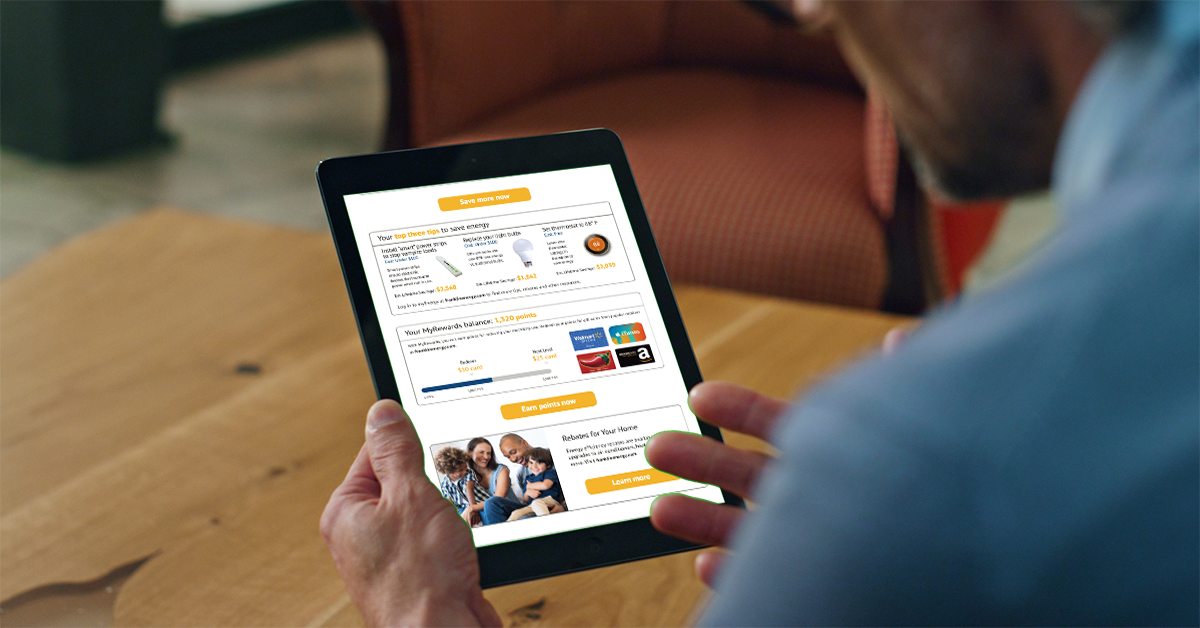
Simplify participation, support equity, and drive measurable savings with our behavioral engagement suite.
Helps customers easily find, qualify for, and purchase energy- and water-saving products—online, any time.
Gather insights on the latest AI news and trends from a cross-functional forum of industry leaders.

Bring together customer insights, field operations, program management, and stakeholder collaboration.
Simplify every step of the home energy assessment process, from the first inspection to the final report.
Brings data, documentation, and decision-making together in one streamlined tool for C&I energy projects.
Simplify participation, support equity, and drive measurable savings with our behavioral engagement suite.
Helps customers easily find, qualify for, and purchase energy- and water-saving products—online, any time.
Gather insights on the latest AI news and trends from a cross-functional forum of industry leaders.
June 8, 2026 •Lloyd Kass
I recently had the opportunity to lead an interactive workshop at the Clean Energy for Homes Conference in Saratoga Springs, New York, on what it takes to operate during a major program transition. New York is heading into a major residential energy efficiency program restructuring that will take effect on January 1, 2027.
The group of 100 attendees packed the room—contractors, implementers, community advocates, and utility and regulator representatives—and the session crackled with participation for all 90 minutes. The takeaway was clear: the challenge isn’t change itself—it’s managing change without clarity.
What we heard reflects a broader pattern. When jurisdictions make significant changes in program design—with new rules, new systems, and new delivery models—they create what I would call a system reset.
These resets are usually pursued for sound reasons. In New York, the intended end state includes:
But in practice, the transition can be tremendously challenging—particularly for contractors.
Across breakout discussions at the workshop, three themes came up consistently:
First, customer messaging becomes the biggest risk.
Contractors are often the last link in the chain but the first to absorb confusion. When program details are evolving—or not fully communicated—contractors are left managing customer expectations without having all the answers.
Second, systems and processes lag behind intent.
New platforms, intake processes, and QA/QC workflows take time to stabilize. At scale, that learning curve matters.
Third—and most importantly—cash flow uncertainty creates real strain.
Contractors can adapt to new rules. What’s harder to manage is unpredictable timing—particularly when it comes to approvals and payments.
One insight from the session really resonated:
You can run a business with changing rules. You cannot run a business with unpredictable cash flow.
Despite the frustration, there was also clear alignment on the end state. Contractors do see value in a simpler, more consistent program landscape. But that only reinforces the central operational reality of any system reset:
The first 6–12 months of any major program reset will feel harder and slower, more complex, and more iterative than what came before.
For utilities, state energy offices and regulators, these transitions are an opportunity—not just to redesign programs, but to improve how they are experienced in the market.
That is where thoughtful implementation matters most. At Franklin Energy, we are increasingly helping clients navigate this challenge through a diagnose → design → deploy approach.
If you are planning a major program transition—or navigating one now—it is worth pressure-testing not just the program design, but the contractor and customer experience that will determine whether it succeeds in practice.
Because successful program design is not just about rules on paper; it is about how those rules perform in the hands of contractors and in the homes of customers.
Want to connect directly with Lloyd about the workshop discussion or inquire about booking a workshop of your own? Schedule time to connect on Lloyd's calendar!